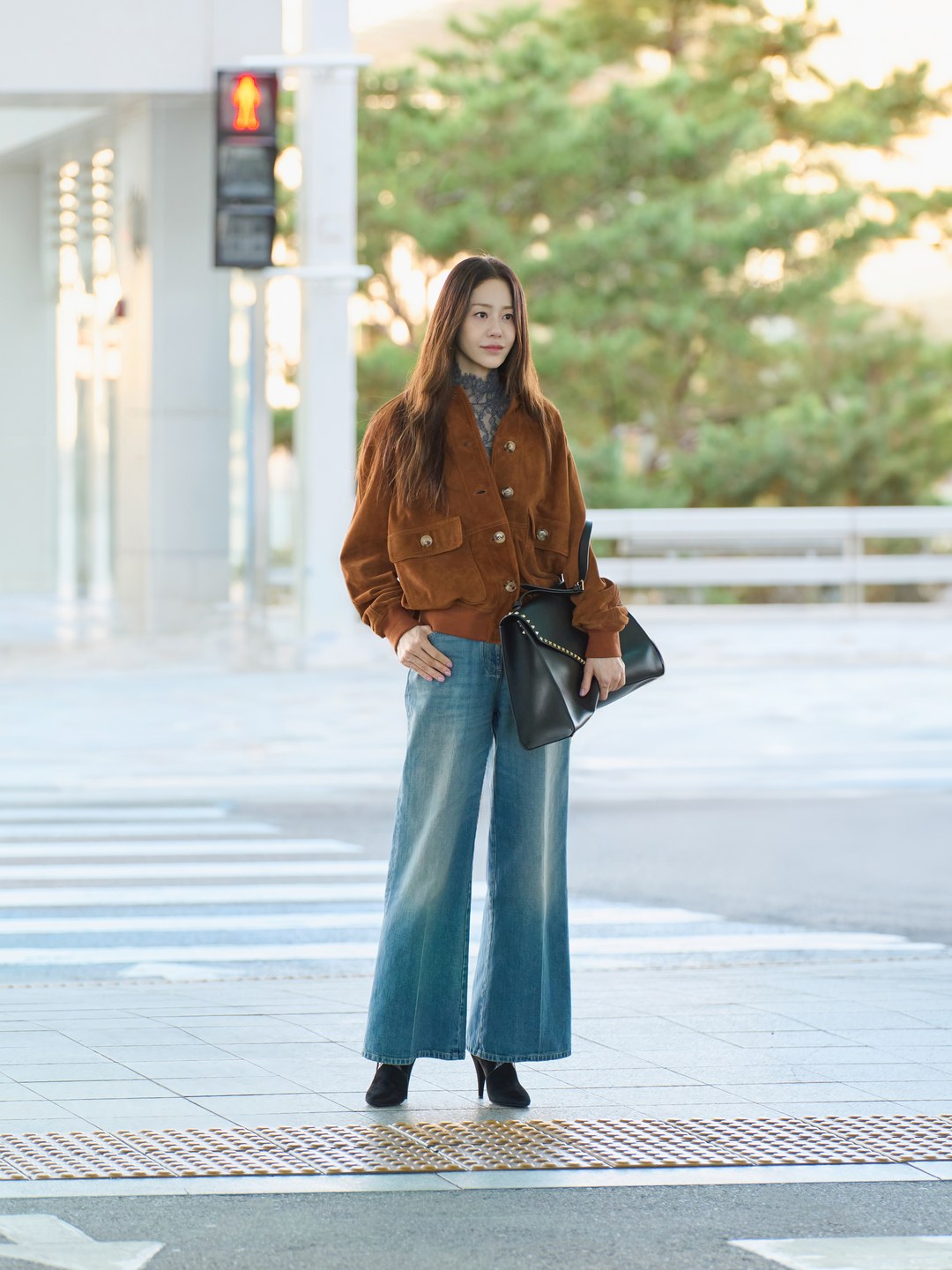
Loewe (LOEWE) has unveiled its Spring/Summer 2027 collection. For the season, Jack McCollough and Lazaro Hernandez centered their thinking on clothes that feel familiar, clothes that are easy to wear and clothes you simply want, presenting a realistic wardrobe that is intuitive and immediately appealing. According to the house, the looks, shaped by identity, lived experience and emotion, convey a physical sensation while remaining deeply emotional, rooted in the body's own responses, the feel of fabric against skin and the rhythms of everyday life.
American pragmatism runs throughout the collection. At its heart is the ease particular to New England, which shaped the designers' childhoods and their outlook on fashion, along with the instinctive style of the women around them at the time. Familiar archetypes were softened and, at the same time, twisted in unexpected ways. Polo shirts were cut back to front, as if pulled off in the heat and hastily put back on, while a simple basketball jersey evolves into a chiffon slip dress silhouette embellished with beaded fringe.
Lightweight knits and trench coats were finished with resin collars for sunglasses. Boat shoes were given a softer construction and contrasting laces, while anoraks were made in silk to be slipped lightly over bare skin.
Spanish Baroque style meets these familiar archetypes. Color blocking, bleeding hues and neons that look sun-faded appear alongside washed-out suede. The lines and planes of American modernism encounter Baroque details throughout: ornate embellishment at the neckline, cutouts at the waist, and painterly sashes and drapes tied with bungee cords, along with pleated details, create bold shapes. Through this, Loewe said, the Spanish sensibility goes beyond a style to reveal an emotional and dramatic aura.
The new Pasito bag is defined by a supple nappa dust bag layered over a classic box structure. The familiar floral pattern of the satin scarf was applied to pants in the style of the taleguilla, the traditional bullfighter's trousers, as well as to chinos and dresses.
The house's 180-year heritage was also freely reinterpreted. The Oro suede blazer, the first garment Loewe ever produced, in 1960, returns with a fresh sensibility, while silk ties bearing motifs from Spanish painting were drawn directly from the house archive. Leather craft techniques were expanded as well. Molded plongé nappa was transformed into short trapeze dresses, and the house's signature flamenco knots and ruching were rendered inside a suede shopper bag that preserves a canvas texture.
The union of heritage, lightness and ease also comes through in the layering. The idea is to peel away layer after layer to reveal the person underneath. Striped jackets and shirt dresses were made using skiving, a technique that shaves leather thin, giving them both graphic precision and a summery lightness. Sheer dresses and skirts strung with translucent glass beads take on the shape of a beach towel wrapped around the bare body.
In accessories, heels were finished with slender satin bows, and the Puzzle bag evolved into the feather-light, east-west Puzzle charm, which can be held in the hand or carried as a clutch. Loewe explained that the collection takes on a new form each time depending on how the wearer breathes and lives, presenting a style rooted in each person's own autobiographical story.